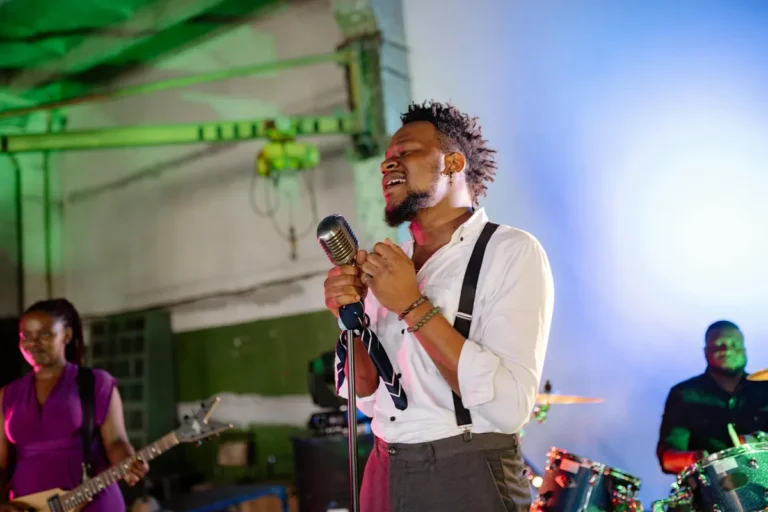
If you read international entertainment press coverage of African music from a decade ago against the coverage that exists today, the change is enormous. Afrobeats coverage went from rare to constant. Amapiano went from invisible to global. Major festivals across the continent went from regional curiosities to international destinations. The progress is real and worth acknowledging.
The coverage remains shallow in specific ways, though. Most international writing still treats African music as essentially one genre — Afrobeats — with occasional acknowledgment that other things exist. The reality is that the continent's music landscape over the past decade has been shaped by a much larger and more complicated set of genres, several of which are far more influential than the international coverage suggests.
Here are nine genres that actually defined the decade. Numbered for clarity. Some you have heard of. Several you probably have not, despite their cultural and commercial weight on the continent.
1. Afrobeats — the obvious one and still the most commercially dominant
Afrobeats is the genre the international press has decided is African music, and it has earned the attention. The Lagos production scene that made the genre operates at scale, the producers and writers and artists are deep, and the export economics have been transformed by streaming.
What the coverage misses is that Afrobeats is itself internally diverse. The Lagos scene, the Accra scene, the diaspora scenes in London and Atlanta and Toronto are all making the genre and all sound different. Treating it as one thing flattens what is actually a federation of regional scenes with distinct production signatures.
2. Amapiano — the genre that quietly took over dance floors globally
Amapiano emerged from South African townships, built on log drum bass and piano-led arrangements, and over the past five years became one of the dominant dance genres globally. The rate at which it spread is genuinely unusual in music history.
The interesting thing about Amapiano is that the production infrastructure is still concentrated in South Africa. The genre's global spread has not pulled production elsewhere in the way that Afrobeats production diffused outward. South African producers remain the architects.
3. Afro House — the genre that took the underground club seriously and built a global circuit
Afro House is the South African house music tradition that has connected to the broader European house scene and built a touring circuit across major club cities globally. The Black Coffee economics — and the Cercle-style filmed performance economics — have professionalized the export channel.
The coverage problem here is that the international press treats Afro House as essentially one artist's project, which radically understates the depth of the South African Afro House scene and the broader African house tradition feeding into it.
4. Coupé-Décalé and the Ivorian club tradition
Coupé-Décalé came out of the Ivorian club scene in the early 2000s and continues to define dance music across francophone West Africa. The international coverage is essentially zero. The cultural and commercial weight in the region is enormous.
This is one of those cases where genre coverage in the international press tracks language more than music. Coupé-Décalé sits in a francophone scene that anglophone music journalism rarely engages with, even though the production quality and cultural reach justify serious attention.
5. Gqom — the South African genre that broke through and then partially receded
Gqom emerged from Durban, broke through internationally in the late 2010s, and then partially receded as Amapiano took over the South African dance landscape. The genre is still alive and the producers are still working, but the moment of peak international attention passed.
The Gqom case is instructive about how genre cycles work in music more broadly. International attention is a lagging indicator. By the time a genre gets covered widely, the scene that produced it has often moved on to the next thing.
6. Bongo Flava and the Tanzanian pop scene
Bongo Flava is the Tanzanian pop tradition that has produced some of the highest-streaming African music of the past decade. The scene is dense, the production is sophisticated, and the East African market it serves is enormous.
Coverage in the international entertainment press is again essentially zero. The export numbers from Bongo Flava artists exceed those of many Afrobeats acts that get constant coverage. The disconnect is about media access and language, not music quality.
7. Mbalax and the contemporary Senegalese tradition
Mbalax is the Senegalese tradition rooted in sabar drumming that Youssou N'Dour built into one of the most respected African music scenes globally. The contemporary Mbalax scene has continued to produce serious work even as international attention has moved elsewhere.
Mbalax is also one of the genres where the connection between traditional drumming traditions and contemporary pop production is most direct and most musicologically interesting. Serious music writing about the contemporary scene is rare and would reward investment.
8. Highlife — the elder genre that keeps getting reinvented
Highlife is the Ghanaian and Nigerian genre that predates most of the others on this list and keeps getting reinvented by new generations. The contemporary highlife scene is vibrant and frequently invisible in international coverage because the genre is seen as historical rather than current.
Some of the most interesting West African production over the past decade has been highlife producers borrowing from Afrobeats and Amapiano and creating hybrid forms. The coverage hasn't caught up because the genre is filed under "traditional" rather than current.
9. Continental gospel — the genre that everyone underestimates commercially
African gospel is one of the largest commercial categories of African music, and it sits almost entirely outside the international entertainment press conversation. Stadium-filling gospel artists across Nigeria, Ghana, Kenya, and South Africa operate at scale that rivals or exceeds the secular pop artists who get all the coverage.
The coverage gap here is partly secular bias in international entertainment journalism and partly that gospel doesn't fit neatly into the "discovery" framing that drives a lot of the international Africa coverage. The economics are real and the cultural weight is enormous.
What is probably coming next
The pattern that the past decade suggests is that regional scenes with strong local production infrastructure eventually break through internationally if the production quality is strong enough and the scene has reached enough commercial maturity to support a sustained export push. The coverage lag is significant but not infinite.
The candidates that look most likely to follow this pattern over the next five years include the Ethiopian and Eritrean diaspora scenes that have been building production infrastructure quietly, the contemporary Lusophone scene across Angola and Mozambique that has been producing increasingly polished work, and the Egyptian electronic scene that has built a serious club infrastructure with limited international visibility.
What the next decade probably will not look like is "Africa" being treated as one genre. The internal diversity that the coverage flattens is becoming impossible to ignore even for the international press, and the next round of genre coverage will probably be forced to engage with the actual regional and stylistic complexity that has always been there.
That is overdue. The continent is not one genre. It is roughly fifty-four countries with distinct music scenes, several of which are individually larger and more interesting than entire international music genres that get vastly more press attention.